A supplement buying checklist: identity, evidence and checkout
Organize the product, evidence, suitability and purchase questions that should remain visible before you choose a supplement.
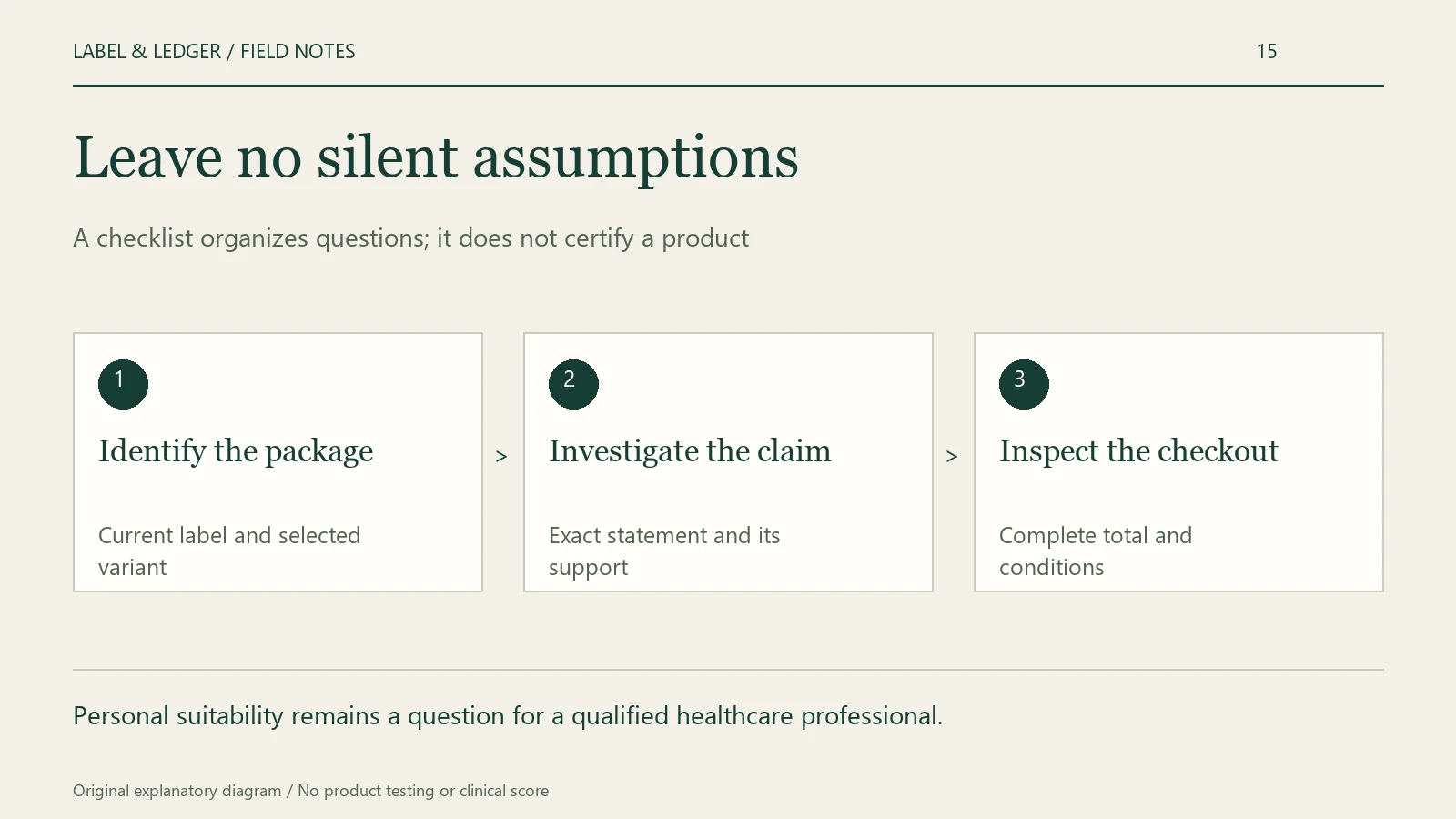
A practical supplement buying checklist should establish exactly what product is being offered, what information supports its claims and what the complete purchase will cost. Personal suitability is a separate question for a qualified healthcare professional. Completing a checklist does not certify a bottle as safe or effective. Its purpose is to expose unanswered questions early enough that a discount or polished listing does not quietly decide them for you.
Begin with a precise product record
Record the exact name, variant, package count, form and seller. Obtain a readable current label for that selected variant. A front photograph alone is not enough to calculate serving cost or inspect the complete declared ingredient information. If a listing combines several package sizes, check the selected option again at checkout. Preserve the label and offer together so they can be reviewed as a matching pair.
Separate the manufacturer identity from the seller identity. You may need one party for formulation questions and another for an order question. Do not infer a relationship from similar page design or a familiar brand name in a marketplace title. If you cannot establish which item is being sold, leave the purchase unresolved rather than filling the identity fields with assumptions.
Understand the US approval boundary
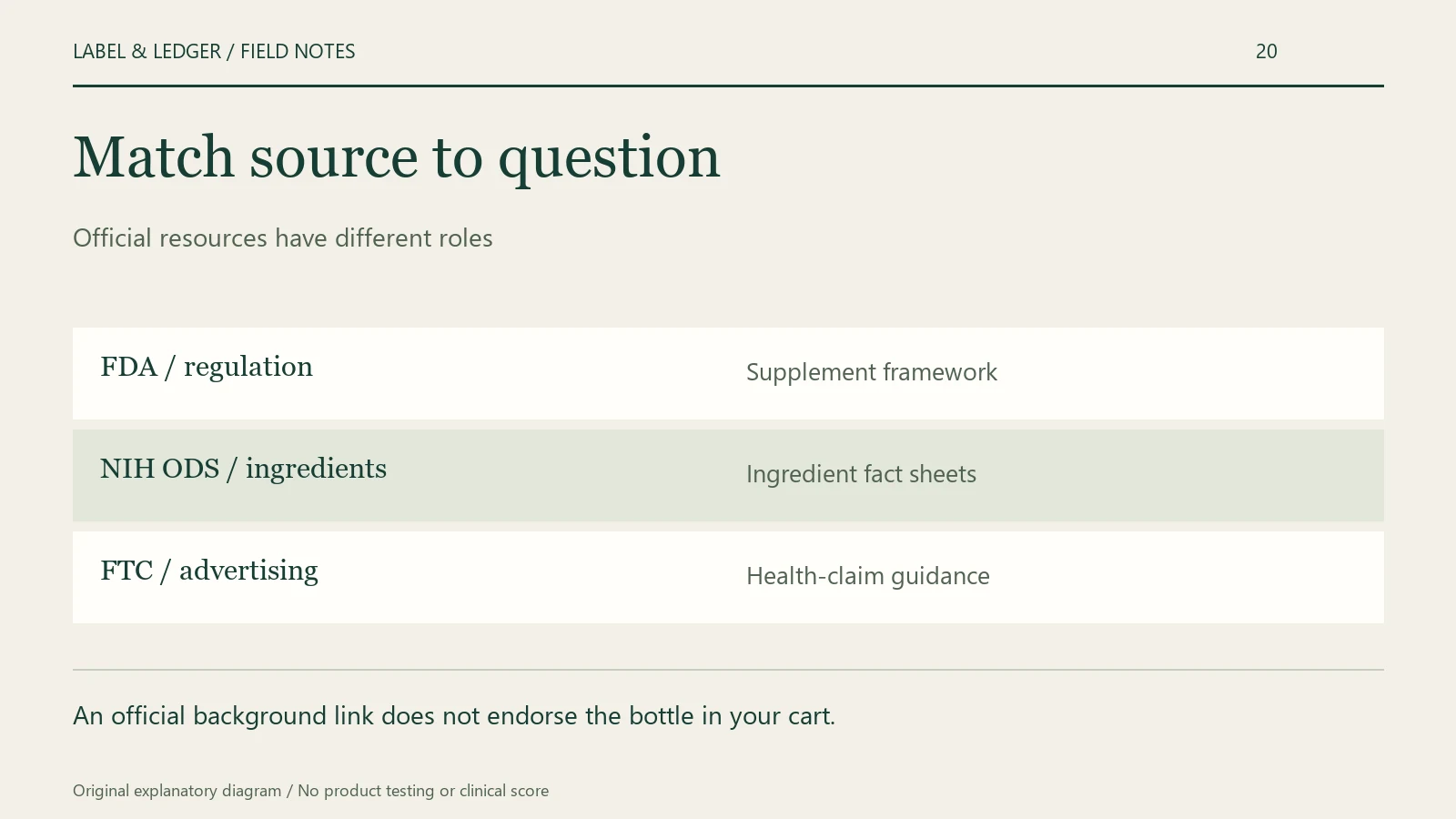
FDA states that dietary supplements are not approved by the agency before marketing in the way drugs are. The agency's supplement questions and answers explain the regulatory framework and its oversight role. Do not interpret a reference to FDA, a facility statement or a government-looking graphic as product approval. Check the exact claim rather than letting a reassuring abbreviation stand in for its meaning.
This boundary is not a claim that every supplement is ineffective or that nothing is regulated. It is a reason to ask the right questions about the actual product and evidence. Keep regulatory status, declared composition and personal suitability separate. A price worksheet, certification logo or long ingredient list cannot supply all three answers.
Make an evidence question from the advertisement
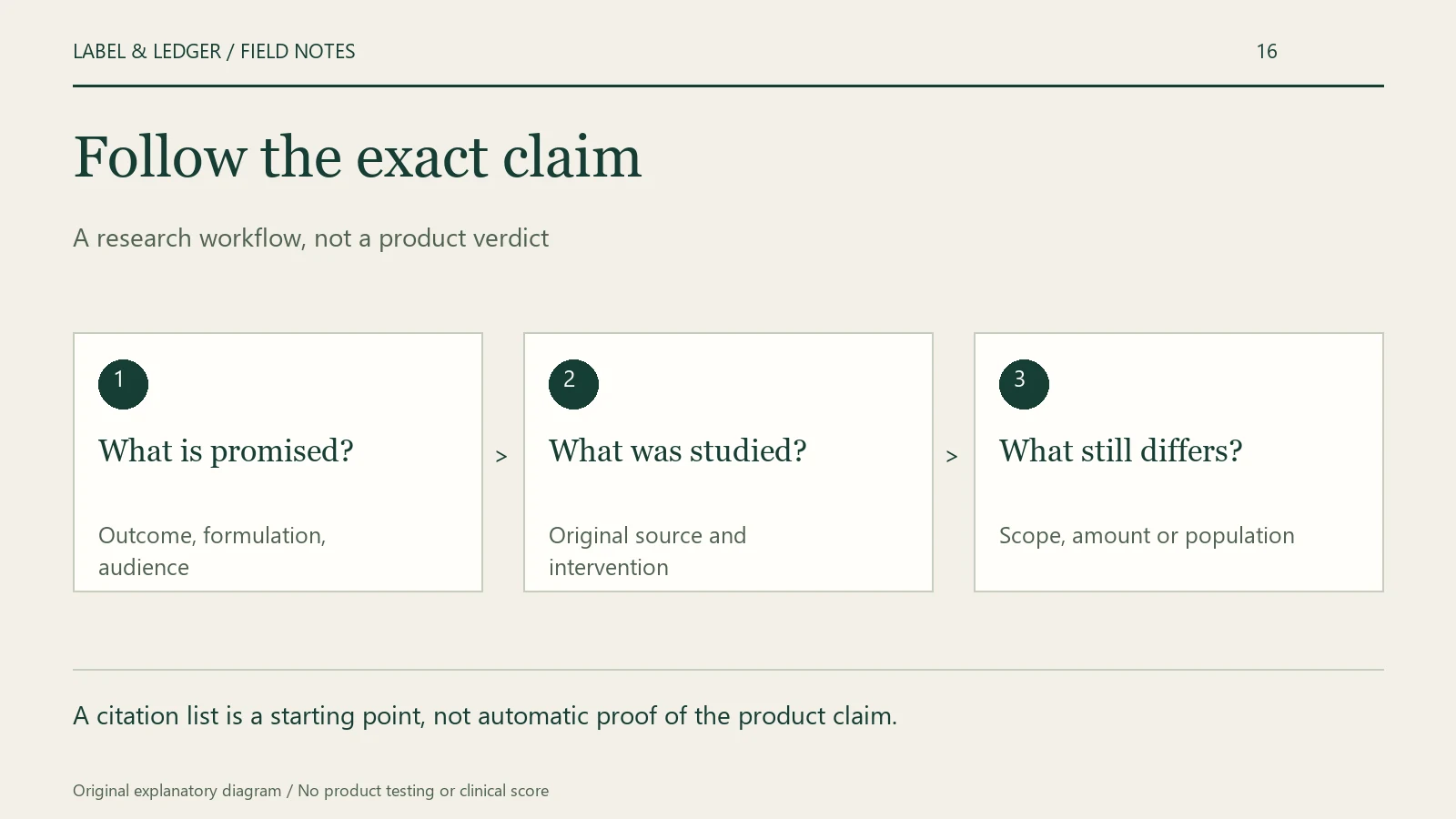
Copy the specific claim into a private note and identify the outcome it implies. Ask what evidence the seller provides and whether it concerns the same formulation. A general ingredient article is not automatically evidence for a multi-ingredient product. An enthusiastic review is a different kind of information from a controlled study. This guide does not evaluate individual studies or rank products.
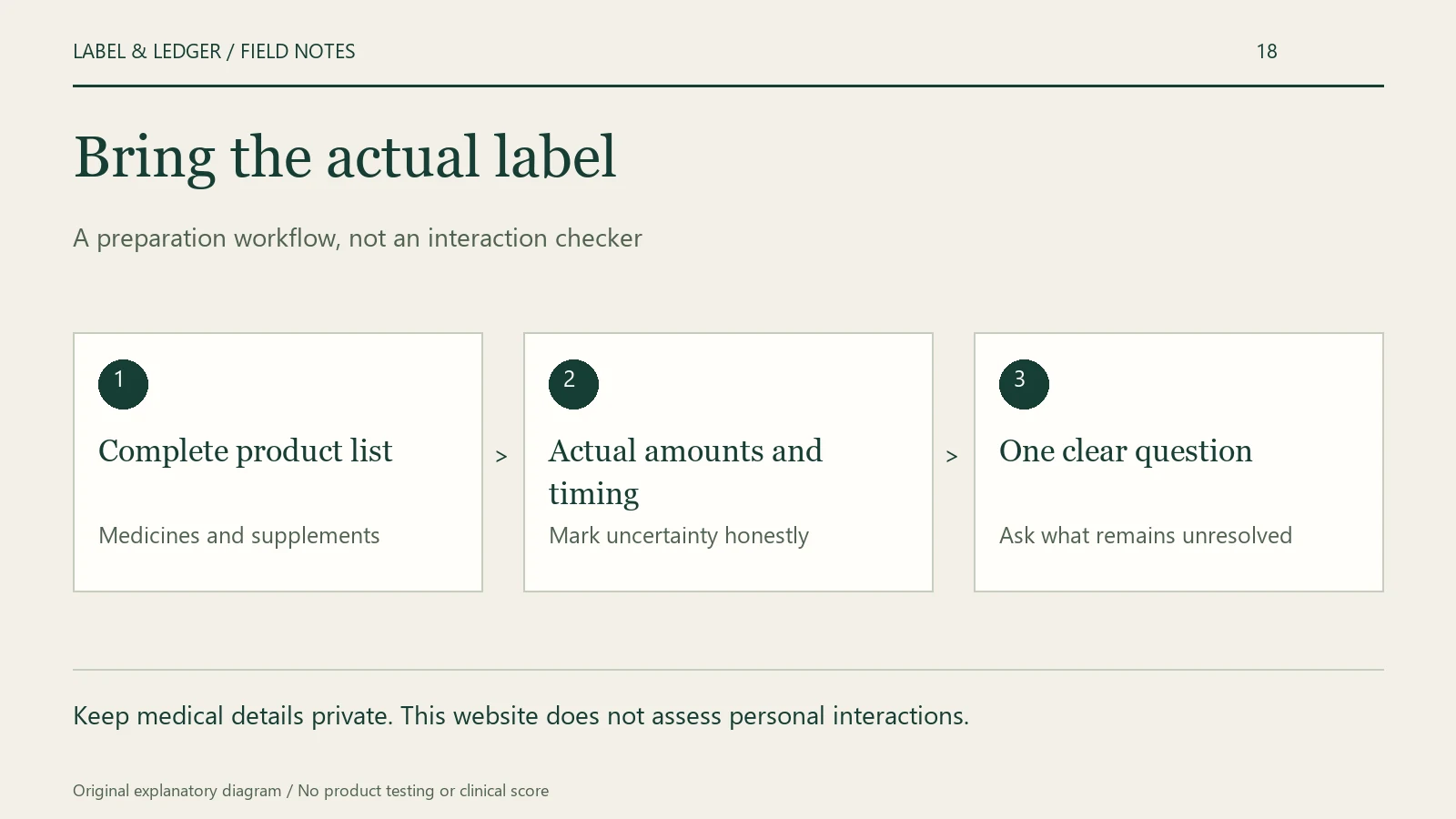
For a medically relevant claim, bring the wording and actual label to an appropriate healthcare professional. Do not stop prescribed treatment, substitute a supplement for a medicine or change use because a seller presents a confident story. The checklist helps you prepare a focused question; it does not authorize a treatment decision or establish an individualized benefit-risk balance.
Keep the minimum fields visible
| Area | Question to resolve | Useful record |
|---|---|---|
| Identity | Which exact package and seller? | Matching label and selected variant |
| Quantity | What is in one labeled serving? | Serving size and ingredient amounts |
| Evidence | What supports the exact claim? | Original source or unanswered request |
| Suitability | How does this fit personal circumstances? | Questions for a qualified professional |
| Checkout | What will be paid, and when? | Total, conditions and recurring schedule |
| Receiving | Is the received package the expected one? | Label, condition and lot details |
Do not treat an unknown as a failed safety test. Write the specific missing information. This keeps the checklist factual and actionable. A manufacturer may be able to resolve a label ambiguity, while a pharmacist may be needed for a medicine question. Sorting questions by who can answer them is more useful than assigning a vague trust score.
Compare price only after defining the product
Calculate cost per labeled serving from the correct package and complete checkout inputs. Use ingredient unit cost only where the same named quantity is declared on each label. Keep formulation differences beside the results. All example prices on this site are illustrative; the tools do not collect current offers or determine a market's cheapest product. Your own price record needs its own capture date.
Check first-order discounts separately from later subscription charges. Record any minimum purchase and the cost of extra items needed to qualify. A low displayed serving price may depend on conditions that are irrelevant to your intended basket. The checkout question should end with a complete cash total and a clear description of the supply purchased.
Prepare for receipt before discarding packaging
When the package arrives, compare its identity with the order and inspect the information you intended to use. Preserve the receipt, lot identifier if shown, and date information. Follow the product's storage instructions. This guide cannot assess whether a damaged, exposed or questionable product remains usable. Contact the appropriate seller or manufacturer and seek professional advice for health concerns rather than relying on a cost calculation.
The checklist can remain unfinished after delivery if an important question persists. Do not interpret the act of purchasing as confirmation that earlier uncertainties were resolved. If the received formula differs from the listing, update the comparison record and direct the question to the relevant party. Keeping the original offer makes that conversation more precise.
Use a pause as a legitimate outcome
You do not need a product winner at the end of every comparison. If identity, ingredient quantity or a personal-use question remains essential and unanswered, note that the decision is pending. A careful unresolved result is more useful than an unsupported recommendation. The saved checklist is a memory aid, not a score or a certification.
FAQ
Does checking every box mean the product is safe?
No. It means you have worked through these information questions. It does not replace testing, evidence review or individualized professional advice.
Are you recommending a specific product?
No. This site provides methods and tools without product rankings, sales or a laboratory-testing claim.
What should I do with an unanswered question?
Record exactly what is missing and identify who can answer it. Do not replace the gap with an assumption because an offer is expiring.
Sources
- FDA: Questions and answers on dietary supplements — US regulatory framework and approval boundary.
Continue your comparison
- How to check a supplement claim without turning reviews into evidence
- Supplement certification logos: verify the exact product and scope
- What to bring to a pharmacist when asking about supplements
- A supplement problem: getting care and preserving a useful report
- Finding official supplement sources: a research trail you can repeat
- Keep a supplement purchase record that can answer a real question
- Open the buying checklist
- Compare product types and denominators