Finding official supplement sources: a research trail you can repeat
Use FDA, NIH ODS, NCCIH and FTC for distinct questions and keep the claim, source scope and unresolved details in a clear research record.
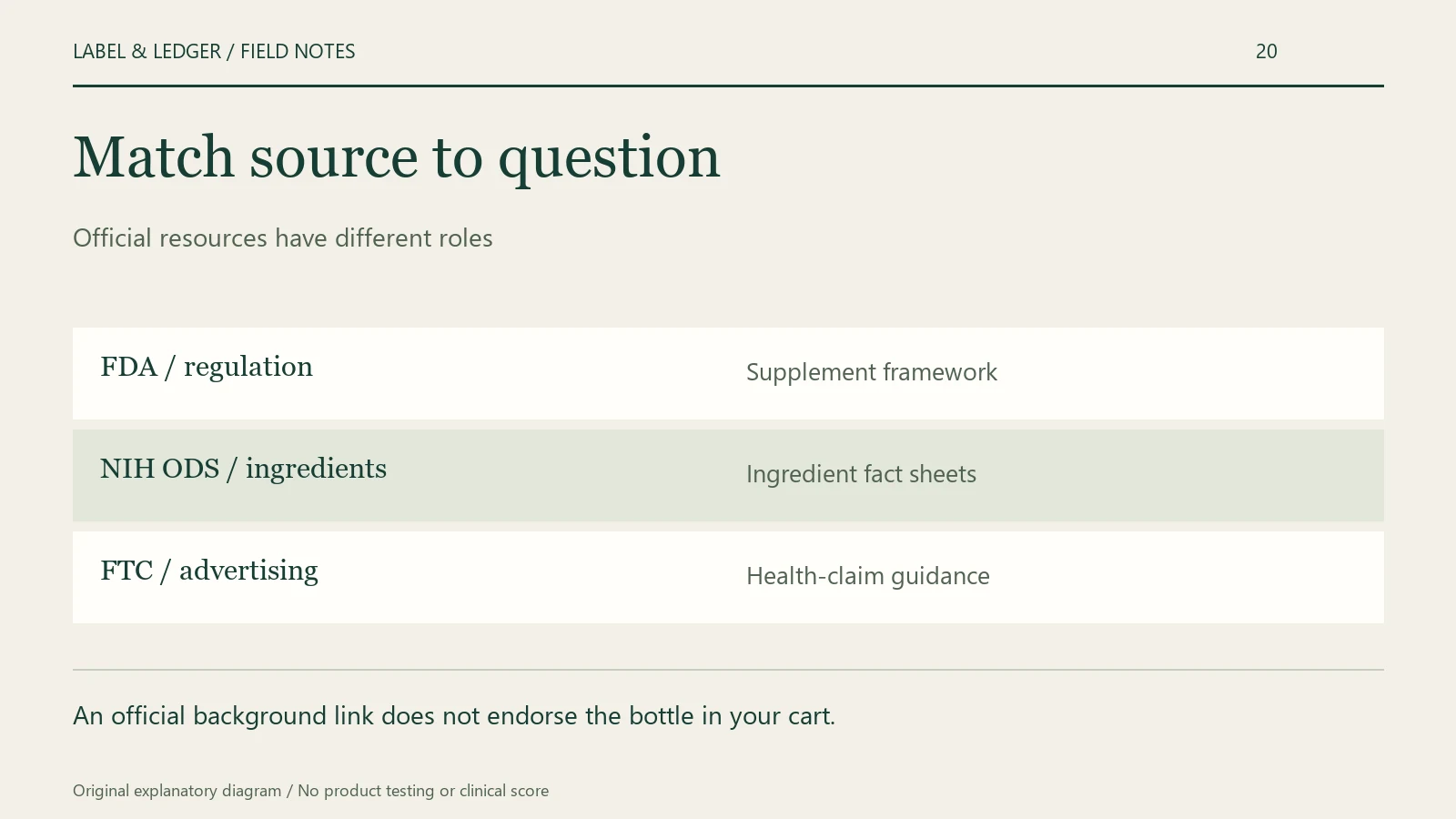
Choose an official source according to the question you need answered. FDA is a starting point for US supplement regulation and product-problem information; NIH ODS provides ingredient fact sheets; NCCIH provides complementary-health information; FTC publishes advertising guidance. None of these starting points automatically endorses a bottle in your cart. A useful research trail records the question, exact source and what remains unresolved instead of treating any government link as a product approval.
Begin with one question per note
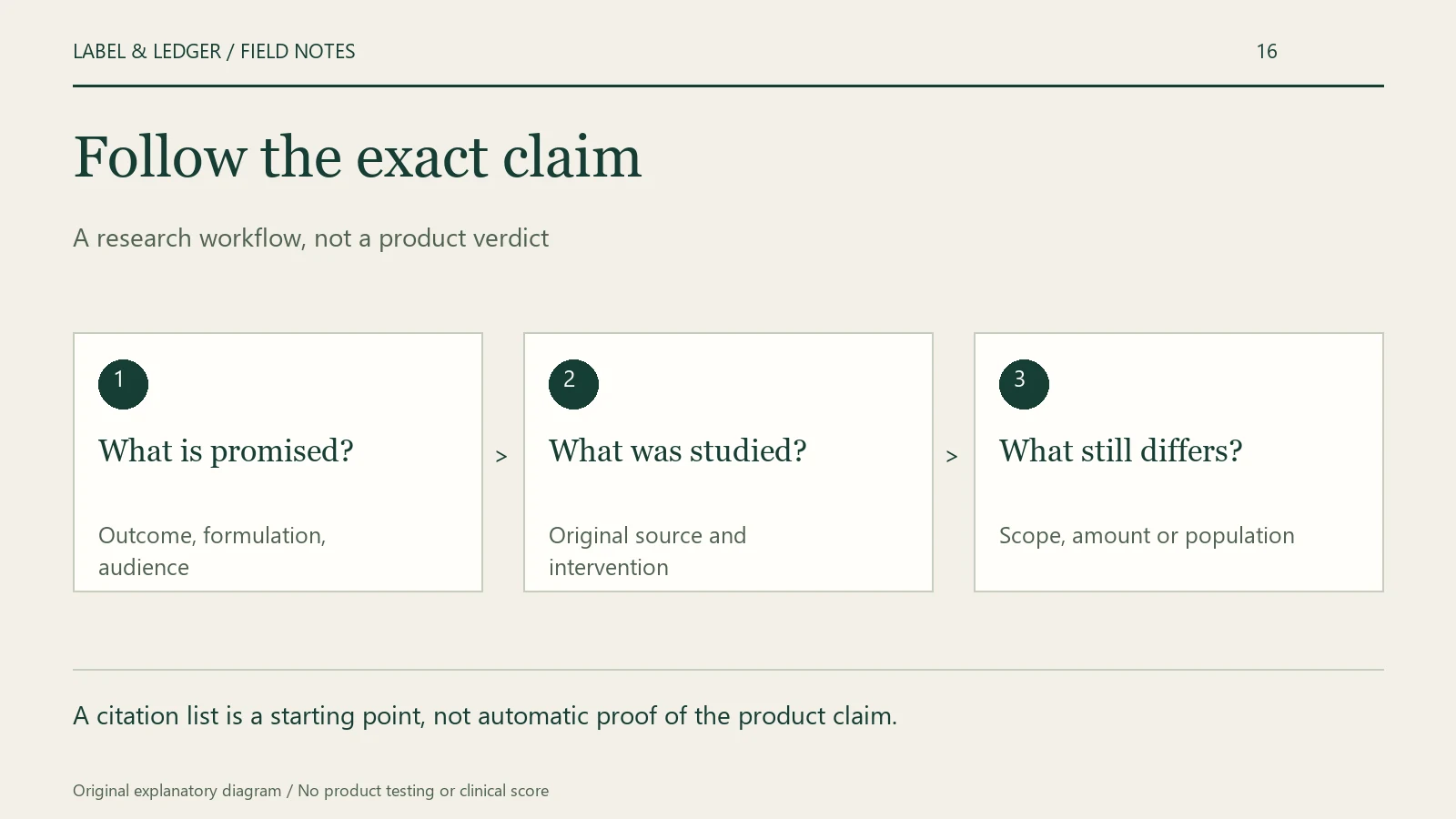
A broad question such as are supplements good can lead to an unmanageable collection of unrelated pages. Narrow it to the specific task: understanding a label field, identifying what an ingredient fact sheet covers, checking an advertising claim or reporting a suspected problem. Write the question before searching. This makes it easier to reject a reassuring but irrelevant page.
Record the exact product and claim separately from the source. A general official fact sheet may provide background without discussing the marketed formulation. Do not place the product name in your source summary unless the source actually identifies it. This small distinction prevents an official reference from becoming an implied endorsement of a product it never evaluated.
Use each organization for its stated role
FDA's supplement questions and answers describe the US regulatory framework. ODS offers consumer and other fact-sheet resources for ingredient research. NCCIH's supplement guidance addresses considerations around use and research. FTC's health-products guidance concerns advertising substantiation. Follow the relevant source's own navigation when your question becomes more specific rather than guessing a deep link from its title.
| Your question | Starting point | What not to infer |
|---|---|---|
| How are supplements regulated? | FDA supplement questions and answers | Approval of a selected product |
| Where is ingredient background? | NIH ODS fact-sheet collection | Personal dose advice from a generic page |
| What use questions should I raise? | NCCIH supplement guidance | A complete individual screening |
| How should health claims be supported? | FTC health-products guidance | A verdict on one advertisement |
| How do I report a suspected problem? | FDA reporting instructions | Proof of causation from a report |
This is a navigation map, not an exclusive list of all useful evidence. An official page may point to research papers, clinical resources or another agency. Follow those links when relevant and record the transition. Avoid representing a secondary summary as the original research simply because it sits on a reputable website.
Read scope before extracting a sentence
Look at the page title, intended audience and topic boundaries. A consumer summary and a detailed technical reference can serve different needs. Check whether a statement concerns an ingredient, a product type, a population or a particular condition. Keep any qualification needed to understand it. Do not extract a favorable sentence while omitting the circumstances that make it applicable.
If a source includes an update date, record the date it actually displays. Keep your own access date separate. Accessing a page today does not mean the agency reviewed it today. This website's guide dates indicate local creation or updating of these guides, not a claim that every linked source was newly published or independently reviewed by a clinician on that date.
Preserve a short evidence trail
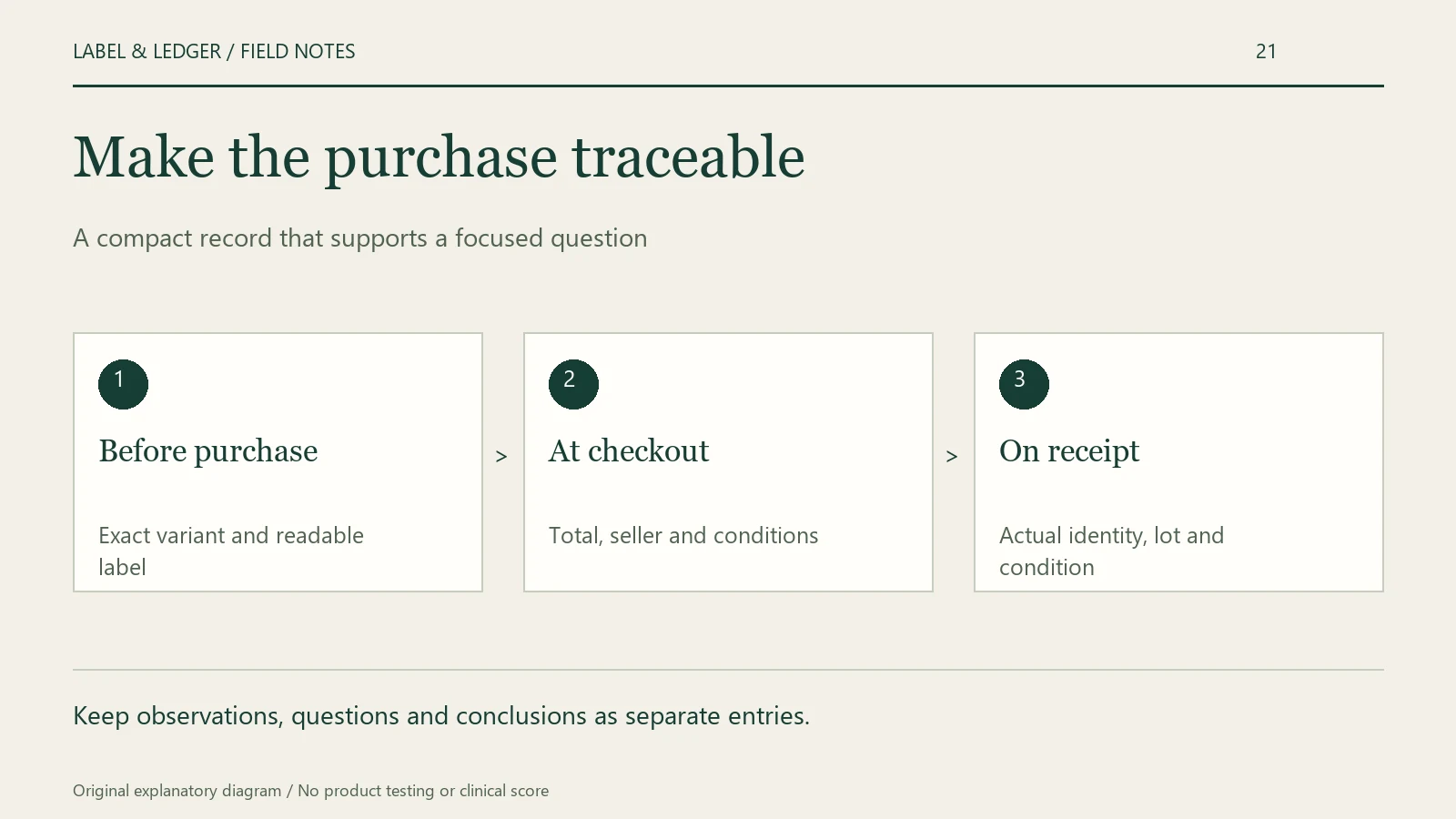
For each question, keep the source title, URL, your access date, a concise paraphrase and the remaining uncertainty. Use your own words and avoid copying whole pages into a public document. A paraphrase should preserve the scope rather than strengthen it. If you are unsure whether you understood a technical statement, mark that uncertainty and ask an appropriate professional.
For an illustrative research note, the conclusion might be that an official page explains the meaning of a label field, while the selected product's unreadable image still prevents confirming its value. The general question has been answered but the product question remains open. Keeping those two outcomes separate is more useful than marking the entire product verified.
Distinguish unavailable evidence from broken navigation
If a link fails, try the agency's official homepage and search for the page title. Do not assume a moved page means the underlying guidance has been withdrawn. Conversely, finding a cached or older page does not establish current applicability. Record what you could access and seek a current official route when the question depends on present rules or instructions.
Do not fabricate a citation to complete an article. If an essential claim cannot be checked, withhold it or state the limitation. A source list is useful only if the links correspond to the statements made. Adding a prestigious homepage beside an unsupported claim does not solve the evidence gap. This site uses source notes to identify the role of each reference rather than to imply endorsement.
Know when to stop self-research
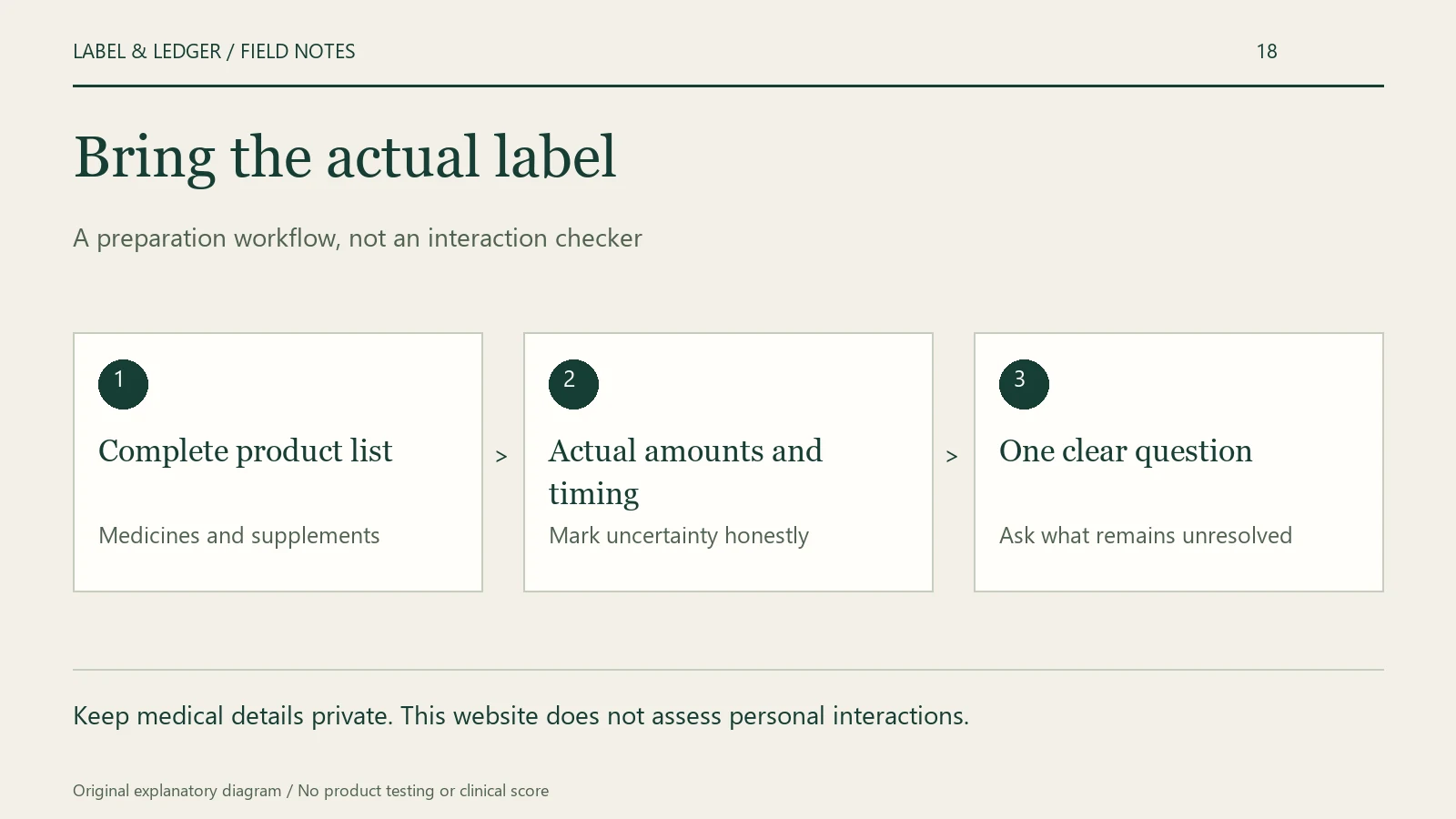
An official resource can help you prepare a question without resolving your individual situation. If the decision involves medicines, symptoms, a child or another personal medical concern, consult a qualified healthcare professional. Bring the exact label and the source that prompted your question. A concise record makes that conversation easier without presenting your internet research as a clinical assessment.
Price methods have a separate trail: package quantities, checkout captures and formulas. Official health sources do not validate invented retail prices. On this site, every worked price example is labeled illustrative and the arithmetic is original. Keep real offer observations in your own dated purchase record rather than treating a guide example as a current market quote.
FAQ
Does a government link mean a supplement is approved?
No. Read what the linked page actually addresses. A general reference is not approval of a selected bottle.
Is my access date the source's review date?
No. Preserve the source's displayed date and your own access date as separate fields.
What if an essential claim cannot be verified?
Leave it unresolved or withhold the claim. Do not invent a citation or use an unrelated page to suggest support.
Sources
- FDA: Dietary supplements — official supplement navigation.
- NIH ODS: Fact sheets — ingredient resources.
- NCCIH: Using dietary supplements wisely — use and research context.
- FTC: Health Products Compliance Guidance — advertising guidance.