How to read a supplement label before comparing prices
Build a useful supplement comparison by recording serving size, ingredient amounts, other ingredients and the exact package identity.
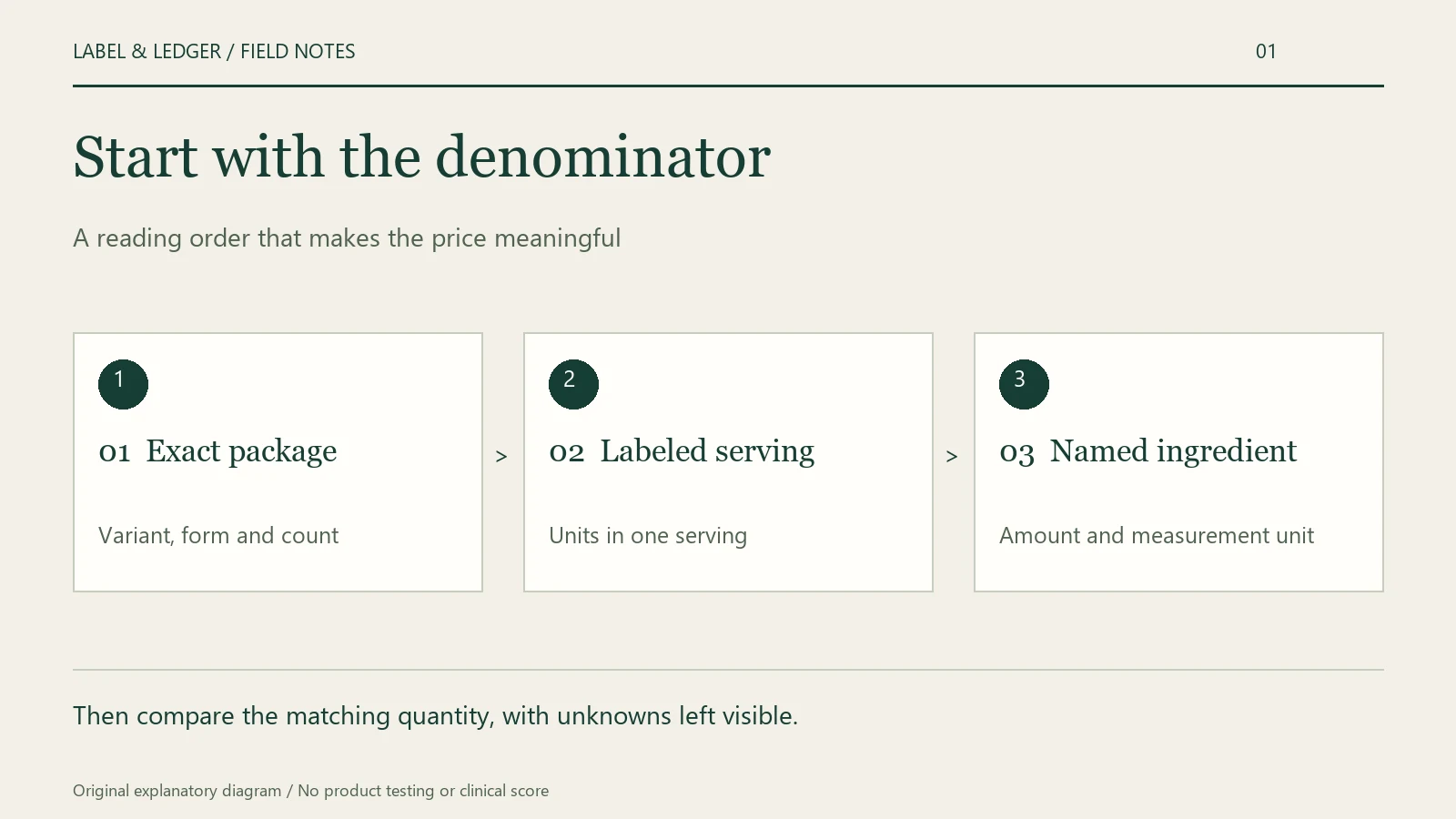
The most useful first step in comparing supplements is to copy the facts from the exact package into a short worksheet. Start with serving size and servings per container, then record the ingredient you mean to compare and its amount per serving. A price without this denominator can make a larger bottle look cheaper even when it contains fewer comparable servings. This guide describes a reading workflow, not a way to decide what you should take.
Start with the product you actually have
A marketplace title is a discovery aid, not your final comparison record. Open the label image and check that its package count matches the selected variant. A listing may offer several sizes or formulations under one page. If the front image and Supplement Facts image show different counts, stop the arithmetic until the seller or manufacturer resolves the mismatch. Saving a screenshot of the selected variant helps explain which information you used.
Record the product name, form, bottle count and seller separately. Keep the date you personally captured the listing in your own worksheet; this site does not supply a current price observation. If you later compare an updated package, preserve both versions rather than silently substituting a new number. That makes a change in serving size distinguishable from a change in price.
Read the serving denominator first
Look for serving size and servings per container. Then connect them to the quantity on the front of the bottle. In an illustrative package containing 120 capsules with two capsules in a labeled serving, there are 60 labeled servings. The number 120 is a unit count, not a statement that the bottle lasts 120 days. Days depend on the use assumption, which should come from an appropriate personal plan rather than a shopping calculator.
If a powder label uses scoops and grams, record both. A scoop describes a measuring implement; grams describe mass. Do not mix a scoop count from one product with a gram amount from another. For a liquid, write the volume of a serving and the total volume in consistent units. Where the label says approximately or about, keep that qualification in your notes.
Separate the ingredient from the packaging story
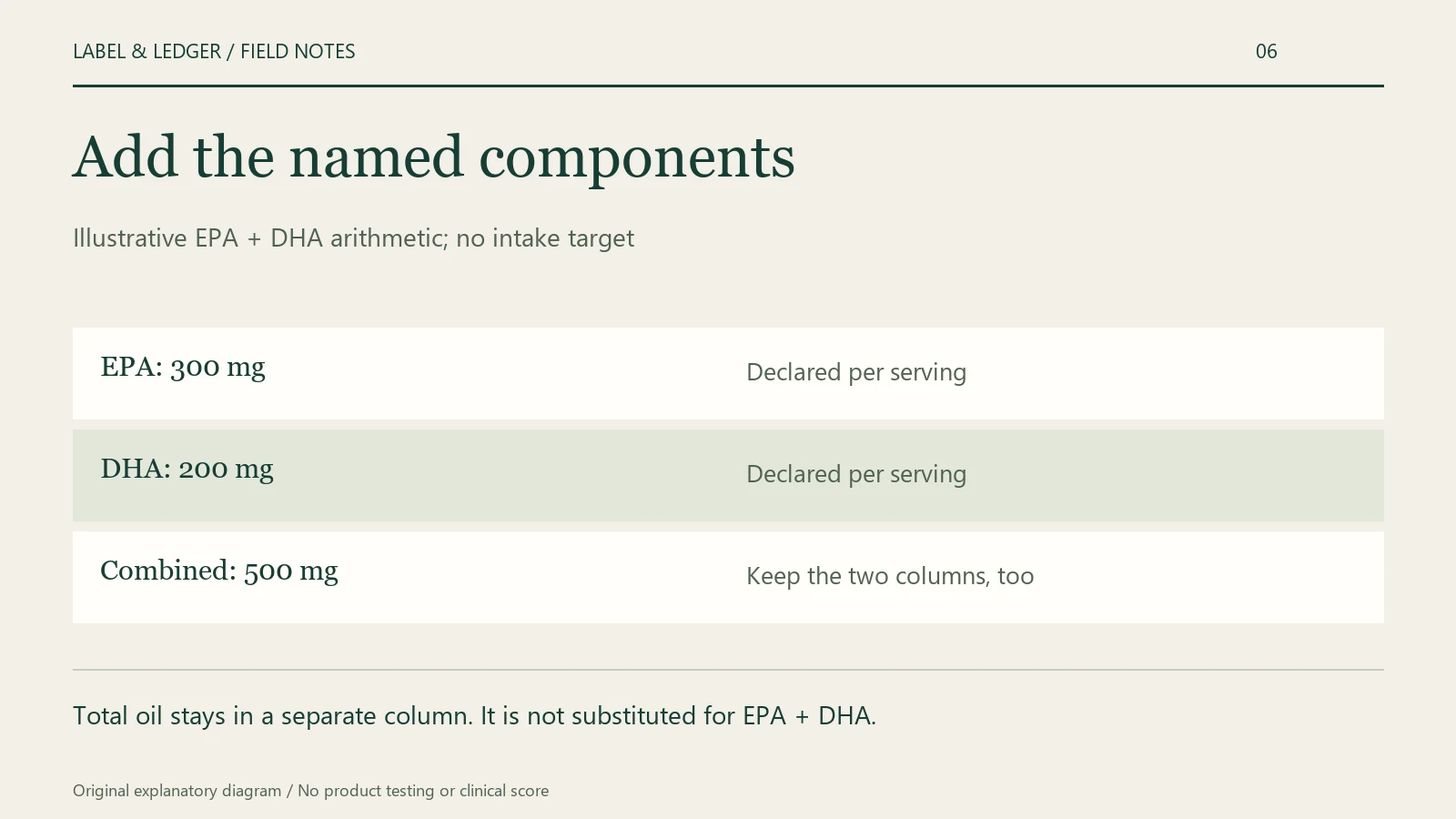
Decide what you are comparing before copying the largest number on the front. Is your question about the full formulation, a particular mineral, or a named component of an oil? Record that exact item and its label amount. A blend total and an individual component amount answer different questions. If the component is not quantified, write unknown rather than allocating the blend weight equally among ingredients.
FDA describes dietary ingredients and other ingredients as separate categories in its supplement questions and answers. For shopping purposes, preserve both lists. The second list can matter to a person checking a particular ingredient even though it does not belong in your active-ingredient cost denominator. Ask the manufacturer if a description is unclear; do not infer a complete composition from a product nickname.
Make a worksheet that exposes gaps
| Field | What to enter | What to avoid |
|---|---|---|
| Exact variant | Name, form and package count | A generic search result title |
| Serving size | Units or measured quantity | Assuming one pill equals one serving |
| Ingredient amount | Named item per serving and unit | The biggest front-label number |
| Other ingredients | Copy or save the current list | Guessing from a marketing phrase |
| Price basis | Checkout total for this variant | An unrelated subscription teaser |
Keep a separate unknowns column. An unanswered question should stay visible after you sort the worksheet by price. Otherwise, the least documented product can appear artificially attractive because its missing facts disappear from the comparison. A short unresolved note is more useful than a confident estimate of an ingredient amount you cannot verify.
Put price underneath a matching quantity
Use the net cost for one package: price plus allocated charges minus an actual dollar discount. Divide that by labeled servings to calculate cost per serving. In an illustrative example, $28 divided by 60 servings is about $0.4667 per serving. Round only the displayed result; keep the full value when calculating a longer budget. This arithmetic is original educational work, not a retailer offer or market average.
Ingredient unit cost is a second comparison, useful only when the same ingredient is measured on both labels. It should not be used to conclude that a different form or a higher amount produces the same benefit at a lower price. If you cannot match the formulation closely enough, keep two separate rows and describe the difference. A fair comparison sometimes ends without a numerical winner.
Decide what needs another source
The package tells you what is declared, not everything you may want to know about performance or personal suitability. Make separate questions for the manufacturer, an official reference and a healthcare professional. A label question might concern an unclear serving count. A research question might concern what evidence exists for a particular claim. A personal question might concern whether the product fits with your medicines or other supplements.
Bring the actual label rather than a paraphrased ingredient name to a consultation. Include all supplements you already use. This helps avoid treating a shopping comparison as a clinical decision. Nothing in this worksheet authorizes starting a supplement, changing a prescribed medicine or selecting a dose for a child or another person.
FAQ
Is a bigger ingredient list a better product?
Counting names measures list length. It does not show that each ingredient is needed or that the combination has evidence for your question. Compare defined attributes instead.
Can I compare two products with different serving sizes?
Yes, if you explicitly calculate a matching denominator and preserve the differences. Do not imply medical equivalence from the calculation.
What if the label image is unreadable?
Request a current readable label for the exact variant. Leave its ingredient-level comparison unfinished until the information is available.
Sources
- FDA: Questions and answers on dietary supplements — definitions and label context.
- NIH ODS: Dietary supplements, what you need to know — reading the panel and discussing use with healthcare providers.
Continue your comparison
- Serving size vs. bottle count: why 120 capsules may mean 60 servings
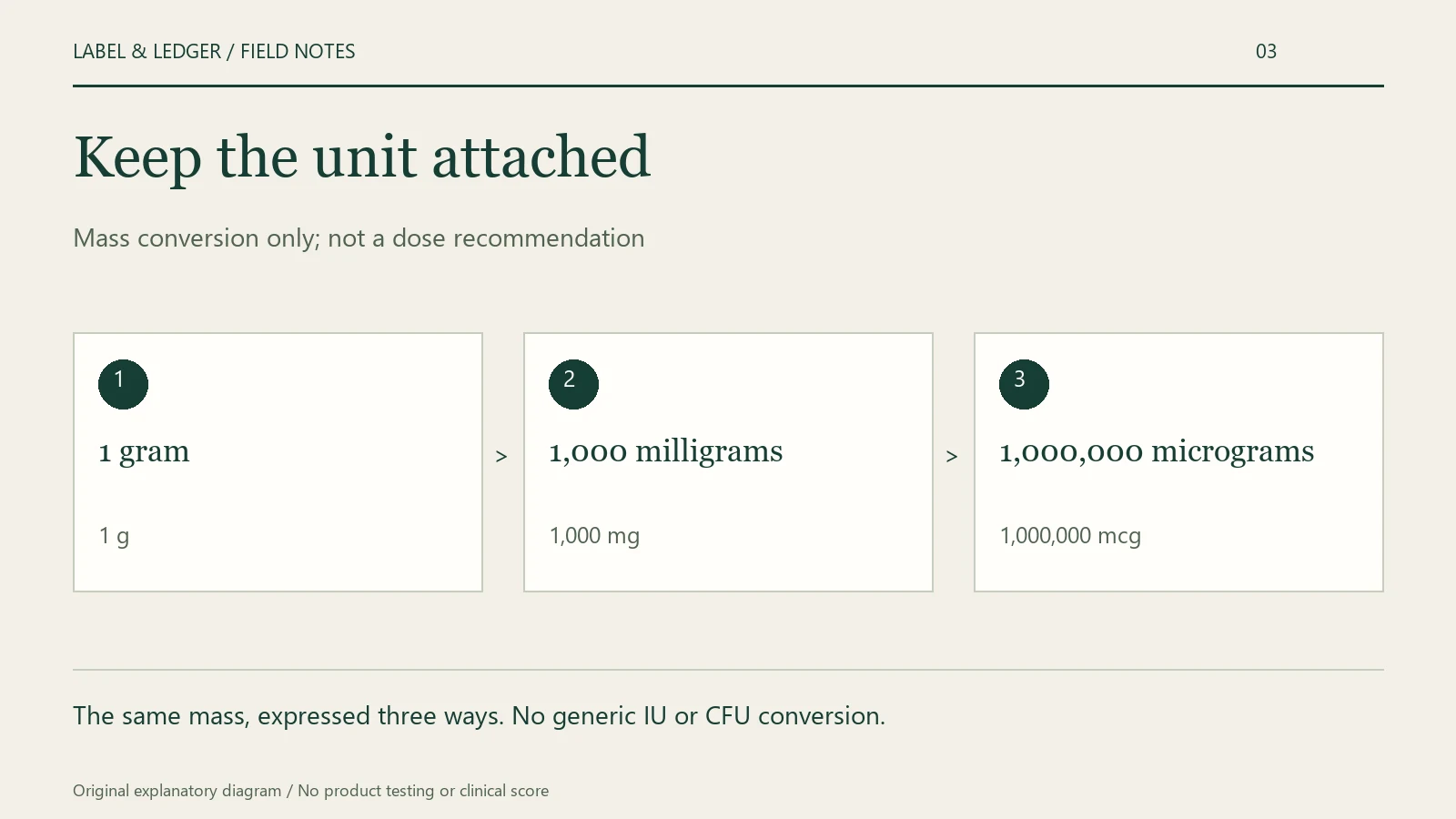
- Ingredient amounts: compare mg, mcg and grams without mixing them
- Comparing proprietary blends when individual amounts are missing
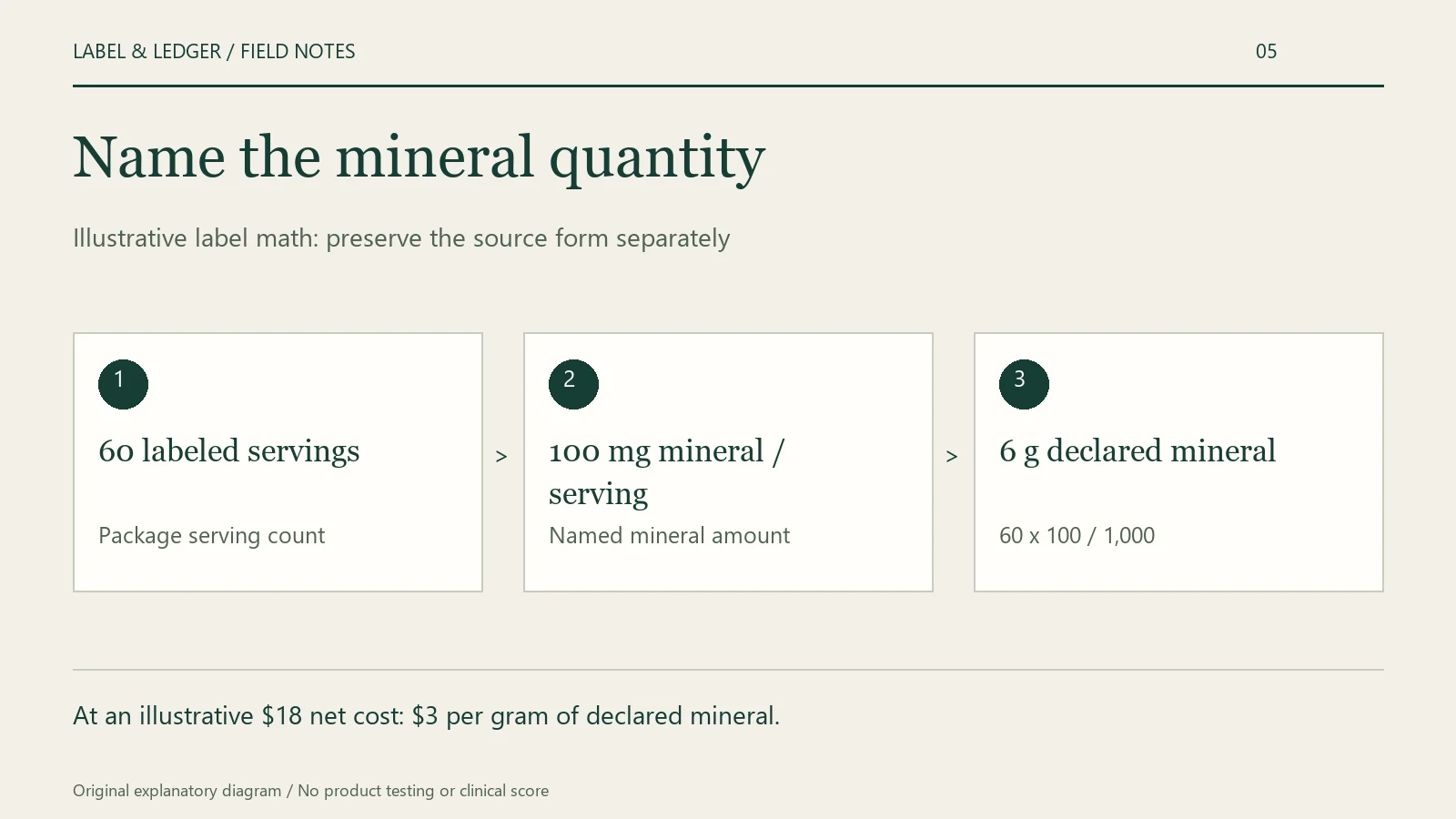
- Mineral amount vs. compound weight: choose the right number
- Fish oil and algal oil: compare the EPA and DHA amounts you mean
- Powder weight vs. protein weight: choosing a fair price denominator
- Calculate cost per labeled serving
- Compare product types and denominators