Read the label
Ingredient amounts: compare mg, mcg and grams without mixing them
Normalize mass units carefully, preserve the named ingredient and avoid converting activity measures with a generic formula.
Compare cost per gram of one explicitly identified ingredient, using the amount per labeled serving.
Use this tool only when the same named ingredient is quantified on both labels. Select milligrams (mg), micrograms (mcg) or grams (g). Do not enter a blend total as though it were the amount of one ingredient. Do not enter total fish oil when your comparison is specifically about EPA plus DHA. For minerals, use the amount of the mineral in Supplement Facts, not the mass of a compound advertised elsewhere.
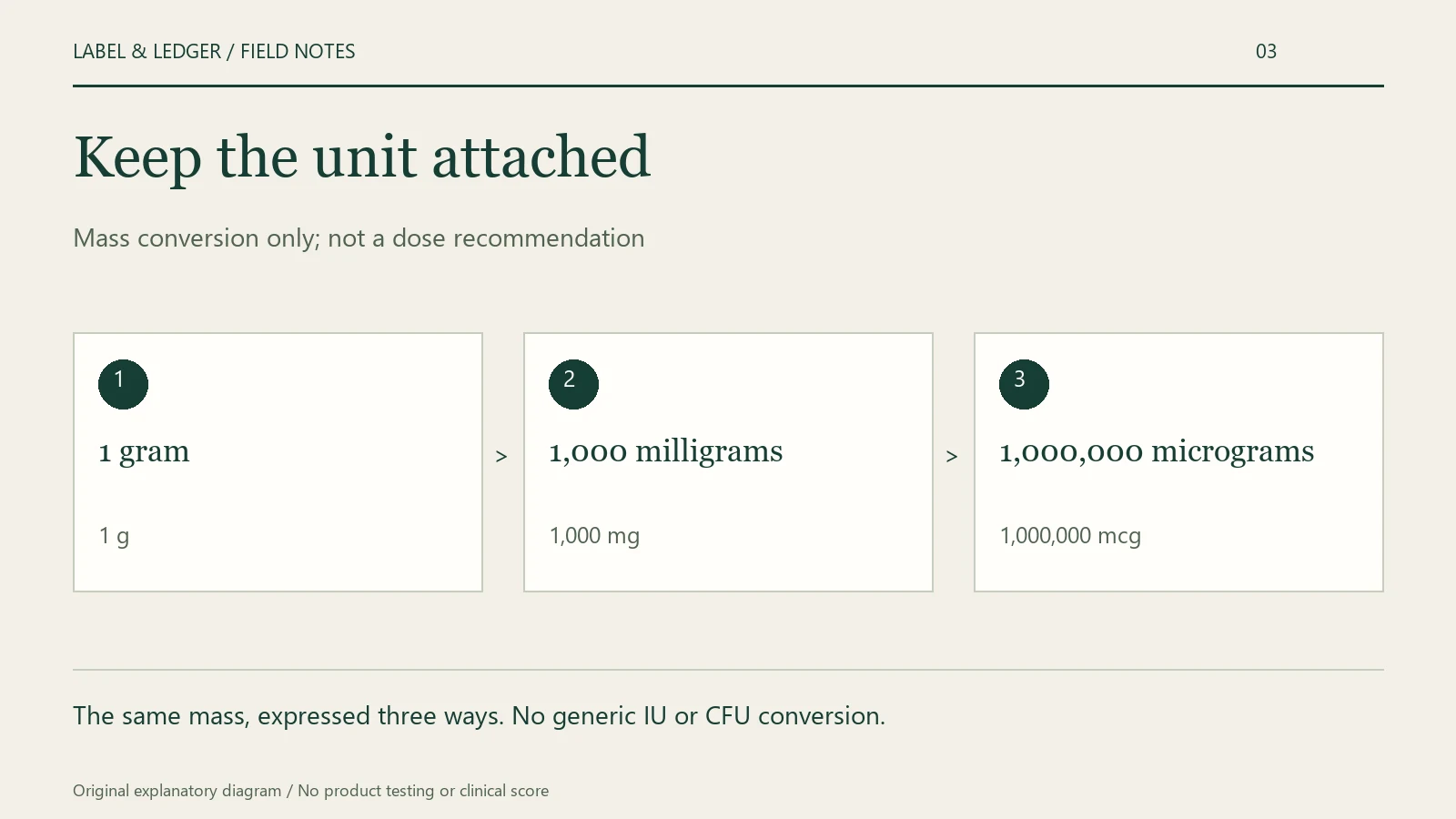
Formula: grams per bottle = labeled servings × ingredient amount per serving × unit conversion. One gram equals 1,000 mg or 1,000,000 mcg. Cost per gram = net checkout cost ÷ grams per bottle.
Illustrative example: $30 for 60 servings containing 500 mg of a named ingredient gives 60 × 500 ÷ 1,000 = 30 g in the bottle. The cost is $1 per gram and $0.50 per labeled serving. These invented inputs demonstrate the arithmetic, not a suitable amount to take.
Cost per gram is a shopping metric, not a health score. Different chemical forms, combinations or formulations may not be interchangeable. Do not compare vitamin D IU using a generic mass conversion. The calculator accepts only mass units and never converts potency, activity, CFU or clinical effect. Obtain the missing label detail or leave the comparison unresolved.
Read the label
Normalize mass units carefully, preserve the named ingredient and avoid converting activity measures with a generic formula.
Read the label
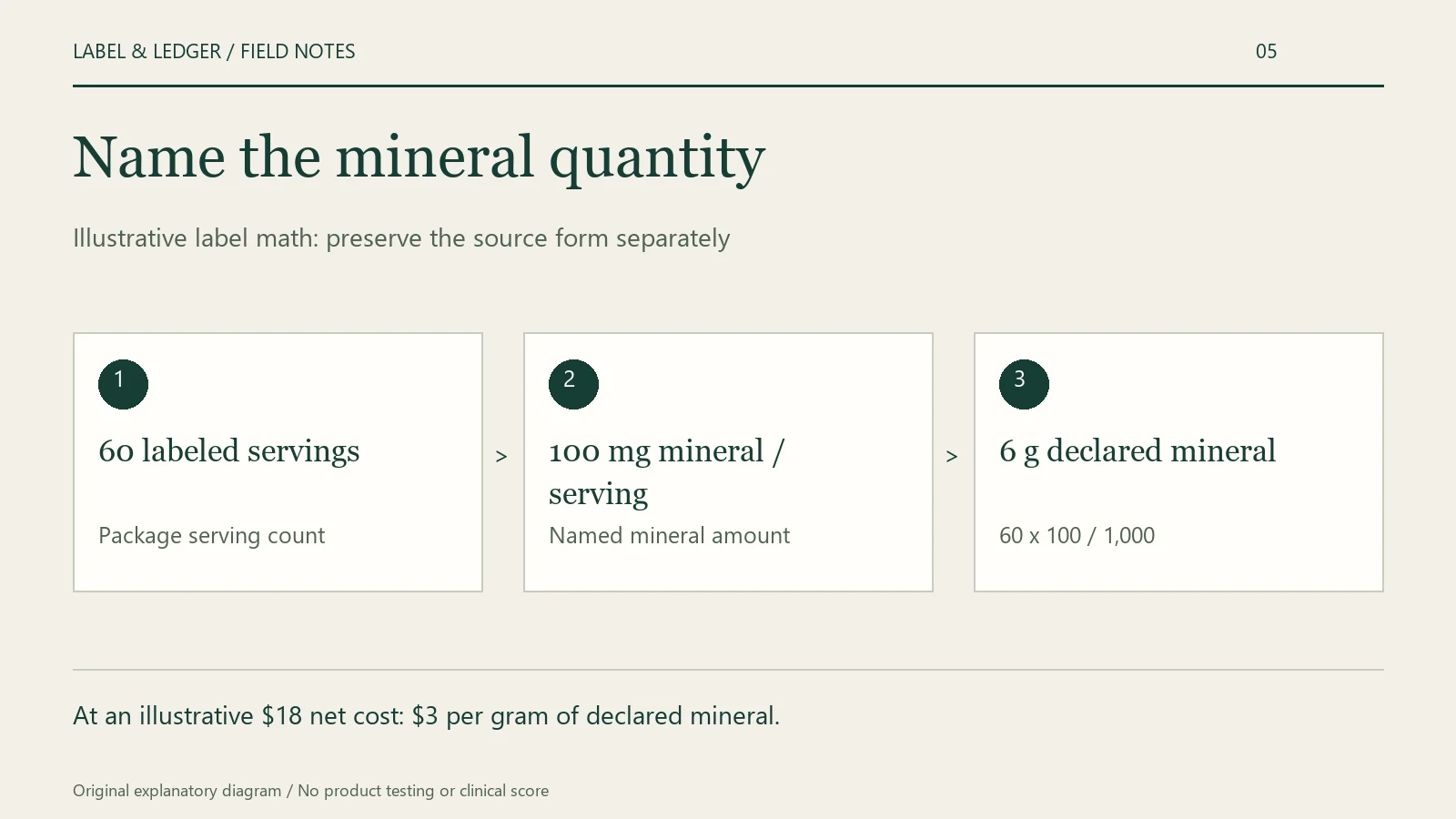
Avoid mixing the amount of a named mineral with the weight of its source compound when building an ingredient price comparison.
Read the label
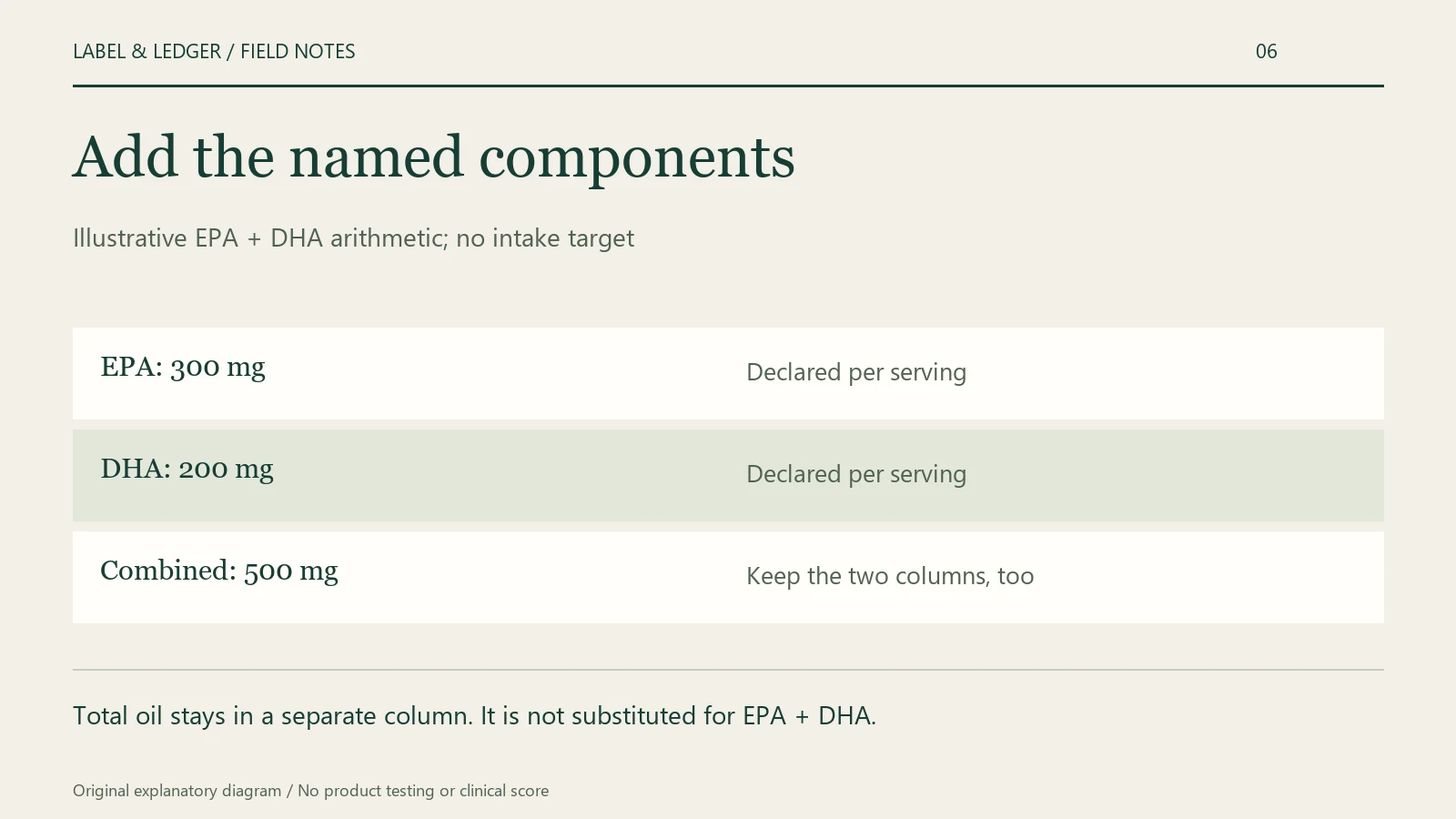
Keep total oil, EPA, DHA and serving size separate so that an omega-3 cost comparison answers a clearly defined question.
Read the label
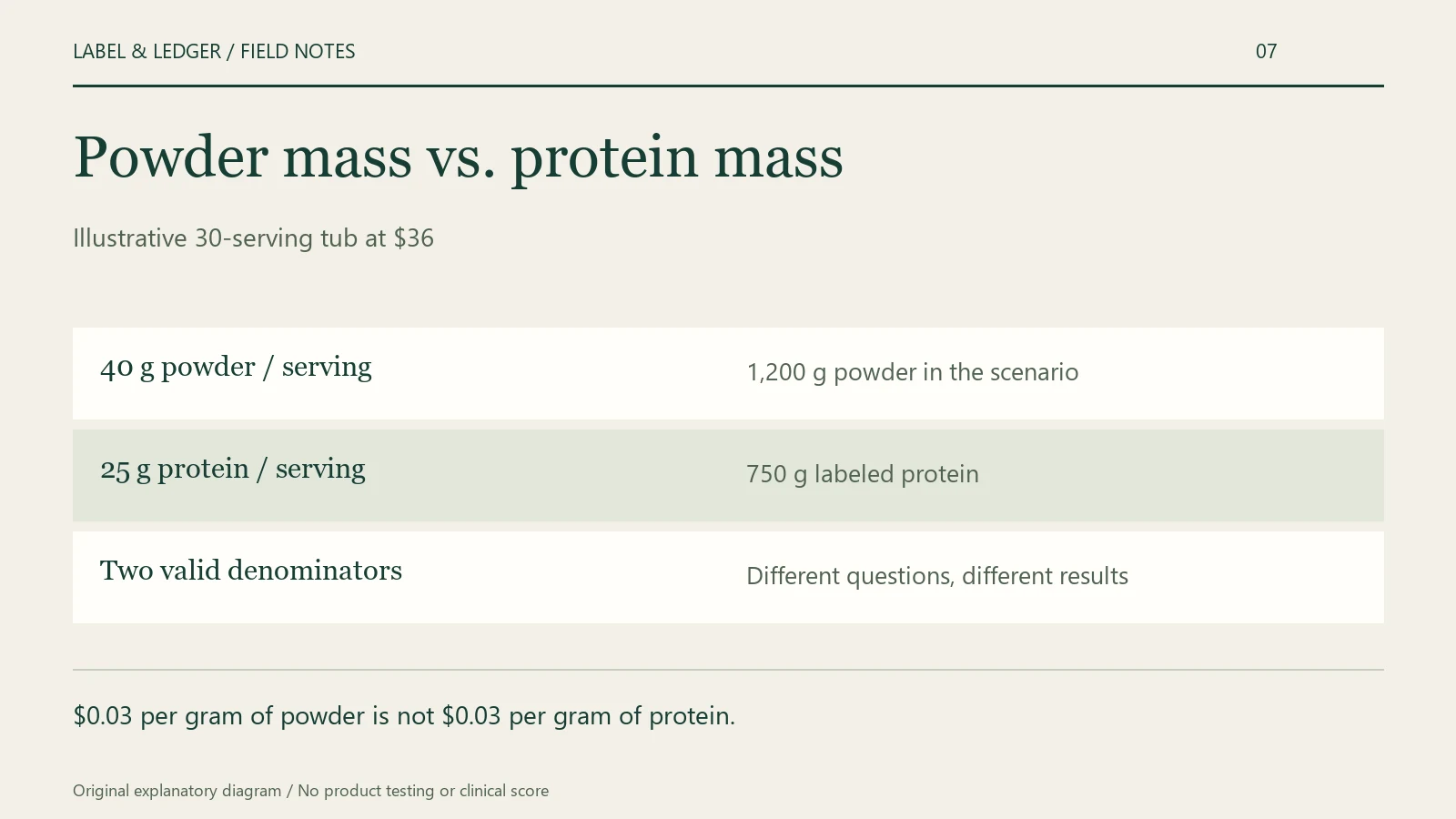
Compare a tub price per gram of labeled protein without confusing total powder mass, scoop size and the nutrient amount.
Read the label
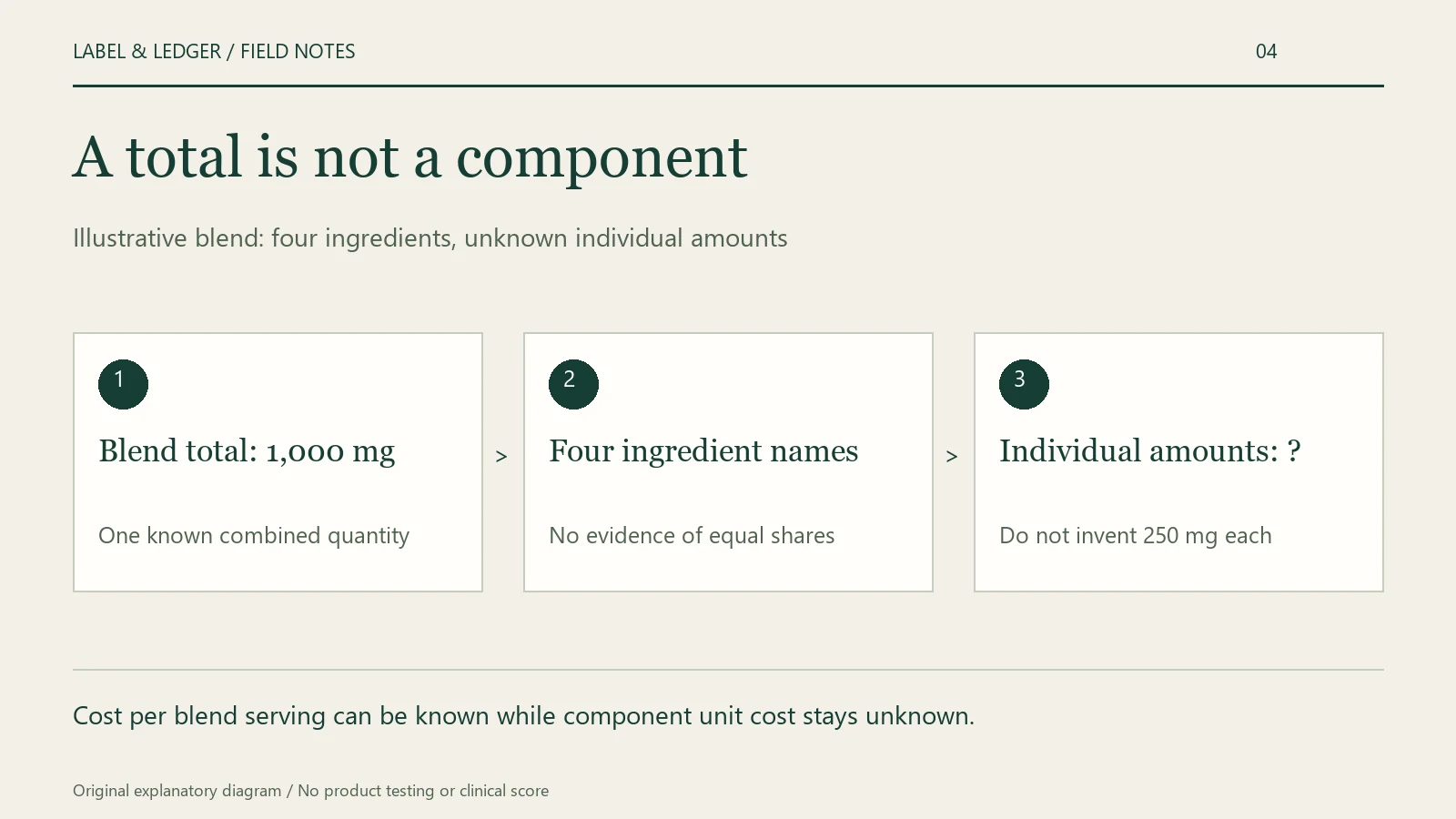
Learn what you can calculate from a blend label, which ingredient comparisons remain unresolved and what to ask before buying.